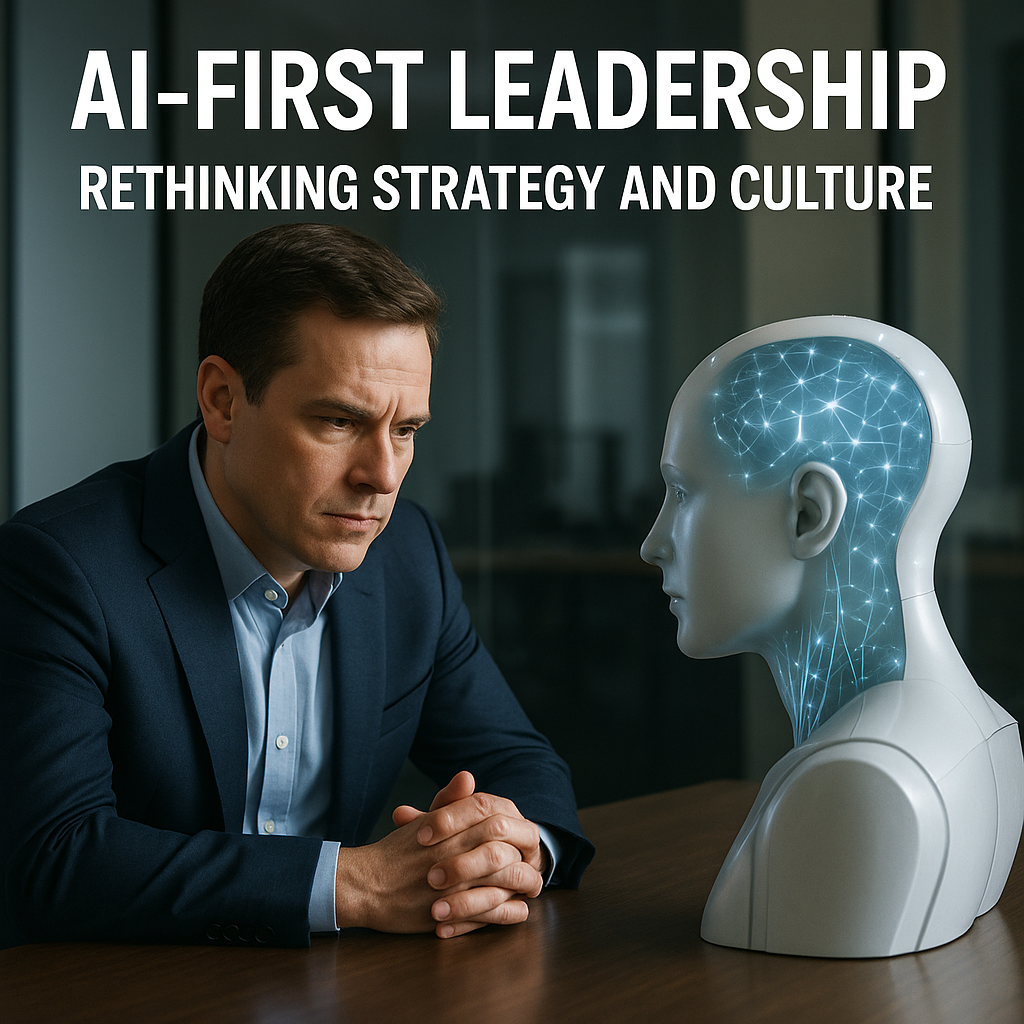
AI-First Leadership: Rethinking Strategy and Culture
Table of Contents
- What AI-First Leadership means in practice
- Rethinking strategy through AI at the center
- Culture as the engine of AI maturity
- Developing AI-first capabilities at scale
- Embedding AI into decision-making and operations
- Leadership strategy in an AI-enabled world
- Ethics, trust, and governance in AI first organizations
- Measuring impact: from vision to outcomes
- Frequently Asked Questions
- Closing thoughts
You’re not just adopting a new tool. You’re recalibrating how your organization thinks, decides, and evolves. An AI-first approach puts artificial intelligence at the heart of strategy, decision-making, and culture. The payoff is real: faster insights, deeper collaboration, and more resilient execution. That said, it requires human oversight, ethical guardrails, and a clear path from learning to impact.
Related Video
AI in Education Done Right: Leadership, Ethics & Real Change
With a career spanning teaching, school leadership, and district-wide innovation, Glenn shares how his philosophy of “simple, ethics-first …
Watch on YouTube →
What AI-First Leadership means in practice
You’re not replacing people with machines. AI becomes a natural partner to human judgment, backing decisions with real-time analytics, mapped scenarios, and predictive insights that accelerate action while preserving control.
Strategy shifts from fixed plans to living bets. It evolves with data and AI-enabled feedback loops that course-correct as conditions shift. That’s the essence of AI-first leadership: higher-quality decisions with humans guiding judgment and accountability.
Core principles to anchor your approach
- Embed AI across functions, not just in IT or operations.
- Establish transparent governance that ties AI use to ethical standards and business outcomes.
- Cultivate AI literacy so more colleagues can collaborate effectively with intelligent systems.
- Design workflows that maximize human, AI collaboration rather than replace human contribution.
Related Video
What Are the 4 Decision-Making Styles? Unlock Your Leadership …
Ever wondered what are the 4 decision-making styles and how they can transform your leadership? In this episode of the AI Leadership Lounge …
Watch on YouTube →
Rethinking strategy through AI at the center
You’re shaping strategy as an ongoing dialogue between people and data. AI illuminates options, surfaces risk earlier, and accelerates experimentation. The guiding question shifts from “What can we do with AI?” to “What moves become possible when AI informs every decision?”
From static plans to dynamic strategy execution
Rigid plans assume calm waters. An AI-first approach embraces volatility, using predictive analytics to anticipate shifts. Real-time dashboards convert insights into action, enabling deliberate pivots rather than reactive moves. Strategy becomes a living set of bets that adapts as conditions evolve.
Aligning AI with business models and customer value
AI is woven into value creation. Expect more precise personalization, dynamic pricing, and adaptive product features as standard capabilities. The aim is a smarter evolution of how you deliver value to customers and stakeholders, not automation for its own sake.
Expert Insight
“AI isn’t just a tool. It’s a business strategy that aligns with outcomes, not pilots, turning data into actionable decisions that accelerate growth.” , Industry Analyst
Culture as the engine of AI maturity
Culture is the real lever behind AI investments. An AI-first culture treats experimentation as normal, learning as rapid, and open dialogue about what works as standard. Data becomes a shared language, and psychological safety is non negotiable so people can raise concerns and test ideas without fear.
Key cultural shifts to drive adoption
- Make data literacy a baseline for every role, not a niche skill.
- Be transparent about AI use , how decisions are made and who owns outcomes.
- Build trust in human, AI collaboration with clear guardrails and accountability.
- Encourage experimentation with rapid feedback loops that turn learnings into action.
Expert Insight
“Culture is the true engine behind AI maturity: align AI efforts with mission, model the behaviors, and cultivate psychological safety so people can test ideas and learn together.” , Industry Analyst
Developing AI-first capabilities at scale
Capability-building is a deliberate journey, not a one-off event. It blends foundational knowledge, hands-on practice, and governance to raise every leader and team toward intelligent decision-making as a default.
Begin with a clear progression that ties learning to outcomes. Move from awareness to capability to autonomy, with concrete milestones at each stage.
Foundational AI knowledge you should instill
Everyone should grasp basic AI concepts, the limits of current technologies, and how data quality shapes results. This foundation supports effective collaboration with data scientists, engineers, and analysts, and helps you decide quickly when speed matters.
Focus areas include data literacy, model basics, and ethical considerations. Ensure every role understands how data quality, bias, and governance influence outcomes.
AI literacy and skill progression for midlevel leaders
Midlevel leaders translate strategy into action. They embed AI into workflows, drive cross-functional initiatives, and identify opportunities for improvement. A robust maturity model helps map progress from awareness to capability to autonomy, clarifying where to invest next.
Empower these leaders to act with clarity and accountability. Provide practical tools to translate AI insights into daily decisions, while maintaining human oversight and governance.
Expert Insight
“AI will change the way we work and think, but its true value comes from how we pair human judgment with data-driven insight, empowering leaders to act with clarity, accountability, and ethical governance.” , Industry Analyst
Embedding AI into decision-making and operations
You’re not here to hand over control to machines. You’re here to augment human judgment with precision, speed, and clarity. Real-time insights, probabilistic forecasts, and objective risk assessments help you choose options confidently. Governance and oversight safeguard values and strategy, keeping the human element central.
Designing AI-infused decision processes
Integrate AI as a core part of governance, planning, and performance reviews. Embed predictive analytics into scenario planning, but require human sign-off on strategic bets and major commitments. This balance preserves accountability while accelerating learning and adaptation.
Cross-functional processes and team workflows
AI thrives when data moves across the organization. Break down silos to enable shared data, common metrics, and integrated decision rights. Align teams around end-to-end value streams so AI multiplies collaboration, not friction, across the enterprise.
Leadership strategy in an AI-enabled world
You lead by example. In an AI-first world, model intellectual candor, test assumptions in public, and choose courage when data challenges the status quo. Your leadership strategy should show how AI amplifies people, not replaces them.
Articulate a clear purpose: AI helps teams move faster with richer context, while human judgment remains at the helm. When decisions are made, trace how AI insights informed choices and where human oversight steered outcomes. That blend, AI-driven clarity with human accountability, builds trust and durable execution.
Midlevel leadership and AI adoption challenges
Midlevel leaders are the linchpin for embedding AI into daily work. They bridge strategy and action, yet many worry their creativity and initiative aren’t fully leveraged. A deliberate development path translates AI insights into concrete improvements on the ground.
- Offer structured upskilling from foundational AI concepts to practical, in-work applications.
- Foster psychological safety so midlevel leaders can raise questions, test ideas publicly, and iterate without fear of reprisal.
- Establish cross-functional processes that connect midlevel leaders with data scientists and product teams to accelerate AI-enabled initiatives.
When midlevel leadership is empowered, teams experience faster experimentation, better alignment with strategy, and clearer ownership of AI-driven results.
Ethics, trust, and governance in AI first organizations
Power without guardrails isn’t leadership. Ethical AI use, bias mitigation, and clear accountability frames must be woven into every initiative. Governance isn’t a bottleneck; it’s the safety net that makes scalable AI possible without eroding trust.
Trust and transparency in AI systems
Explainability is essential, not optional. You and your teams should understand why AI suggests actions and what data underpins those suggestions. Clear explanations reduce fear, boost adoption, and strengthen collaboration across functions.
Measuring impact: from vision to outcomes
You’re not chasing ideas, you’re proving value. AI-first leadership should translate into measurable results: faster decision cycles, sharper forecast accuracy, improved customer experiences, and new revenue opportunities. Tie every initiative to a clear value metric and monitor progress over time.
Think in terms of outcomes you can chart. When strategy links to actions, you create a feedback loop that sustains learning, resilience, and continuous improvement.
Key metrics to monitor
- Decision latency reduction
- Forecast accuracy and confidence intervals
- Cross-functional workflow throughput
- Employee engagement with AI-enabled processes
Frequently Asked Questions
What is AI-first leadership?
You’re not simply adding AI as another tool. AI-first leadership integrates artificial intelligence into strategy, operations, and decision-making so automation and insight drive value, not a standalone project owned by IT. It reframes how you think, act, and measure impact from the executive suite to front-line teams.
How do you start building AI literacy across an organization?
Begin with a clear audit of current knowledge gaps. Then design pragmatic learning journeys that blend foundational AI concepts with hands-on, outcomes-driven projects. Build straightforward, repeatable paths so every function can see how AI enhances workflows and decision quality.
What role do midlevel leaders play in AI transformation?
Midlevel leaders convert strategy into action. They integrate AI into daily workflows, foster cross-functional collaboration, and identify process improvements with AI-powered insights. They sustain momentum, nurture psychological safety, and translate vision into measurable results.
Closing thoughts
You can leverage AI to sharpen strategy, accelerate execution, and strengthen culture without sacrificing the human touch. AI-first leadership aims to empower people to do more meaningful work guided by clarity, governance, and continuous learning. When AI capabilities align with purpose and robust feedback loops, you create a durable edge that endures beyond trends.
References
- AI-First Leadership: Embracing the Future of Work
- AI-First Organizations: Rethinking Culture, Strategy, and Execution
- How Leaders Must Rethink Strategy and Decision-Making in 2026
- AI-First Leadership: Rethinking How Organizations Work Tomorrow
- Rethinking Leadership in the Age of AI – Interface Magazine